If you are drawn to Manhattan neighborhoods with real architectural presence and a true daily rhythm, the Upper West Side often stands out quickly. It offers a rare mix of landmarked prewar streets, major cultural institutions, and easy access to both Central Park and Riverside Park. If you are weighing where life in the city might feel both energized and grounded, this guide will help you picture how the neighborhood works in real life. Let’s dive in.
What defines the Upper West Side
The Upper West Side is generally defined by Manhattan Community Board 7 as the area north of West 59th and 60th Streets and Columbus Circle, east of Central Park West, west of the Hudson River, and north to West 110th Street. In simple terms, it is a long north-south stretch of Manhattan with two major landscape edges.
What gives the neighborhood its strongest identity is its position between two major parks. Central Park anchors the east side, while Riverside Park and the Hudson River shape the west. That setting helps explain why the Upper West Side feels residential and outdoors-oriented even within a dense part of Manhattan.
Upper West Side architecture feels layered
One of the most distinctive things about the Upper West Side is that it does not read as a neighborhood of one building type or one era. Landmarks Preservation Commission materials describe it as one of New York City’s most important centers for turn-of-the-century apartment-house construction. You see that history in the mix of rowhouses, broad apartment houses, and preserved avenues.
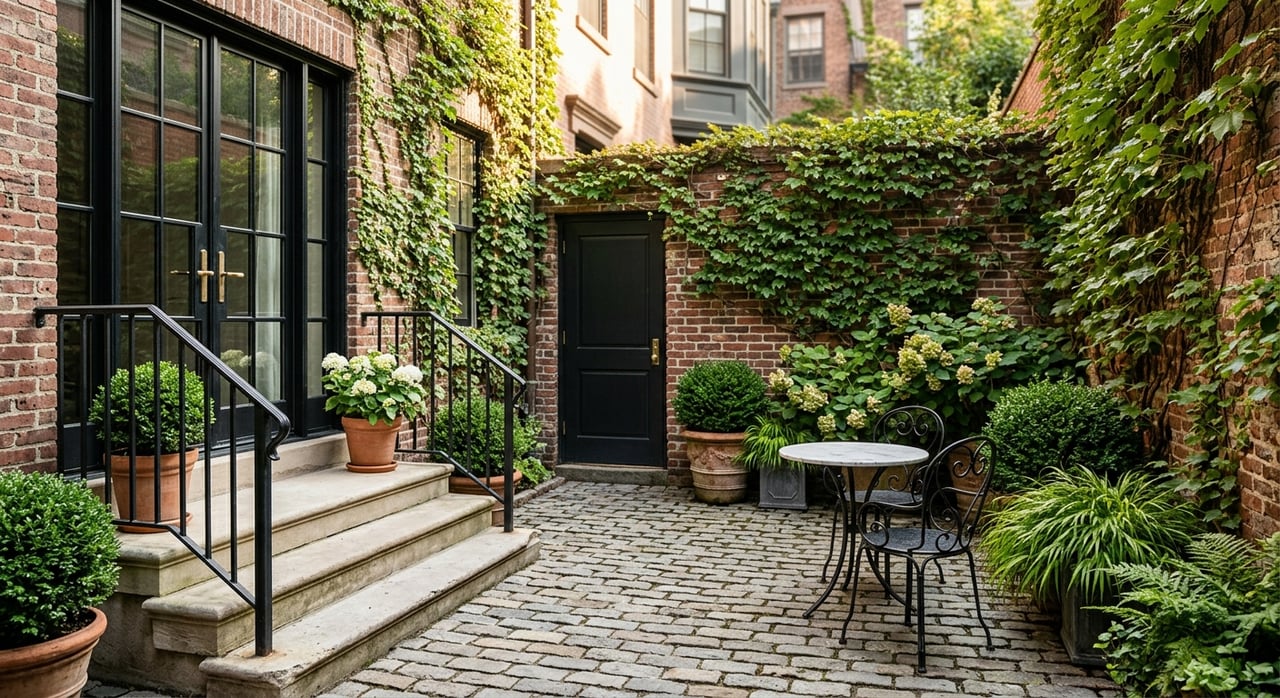
Rather than a uniform field of newer towers, the neighborhood is known for a layered prewar streetscape. You can picture stooped brownstones on one block, large apartment buildings on another, and long landmarked corridors that still carry much of their original character. That blend is part of what gives the area its visual depth.
Why so much prewar housing remains
Transit played a major role in the neighborhood’s growth. According to an LPC designation report, the Ninth Avenue elevated rail line in 1879 made commuting downtown easier, and the later Broadway subway increased land values and accelerated apartment-house construction, especially near Broadway.
That development pattern still shapes the neighborhood today. The Upper West Side grew as a dense residential district during a period when apartment design carried a strong sense of scale and detail, and much of that fabric remains visible.
Historic districts matter here
Preservation is not just a background detail on the Upper West Side. Community Board 7’s historic district resources show that the neighborhood includes the Upper West Side/Central Park West Historic District along with multiple Riverside Drive and West End Avenue historic districts.
The Upper West Side/Central Park West Historic District was designated on April 24, 1990. For you as a buyer or neighborhood watcher, that helps explain why so many blocks feel especially intact compared with other parts of Manhattan.
Styles you will notice
The neighborhood’s architecture includes notable examples of Beaux-Arts, Italian Renaissance, and neo-Gothic design. LPC materials also cite well-known buildings such as the Dorilton, Chatsworth, Prasada, Langham, Apthorp, Belnord, and Red House as part of that story.
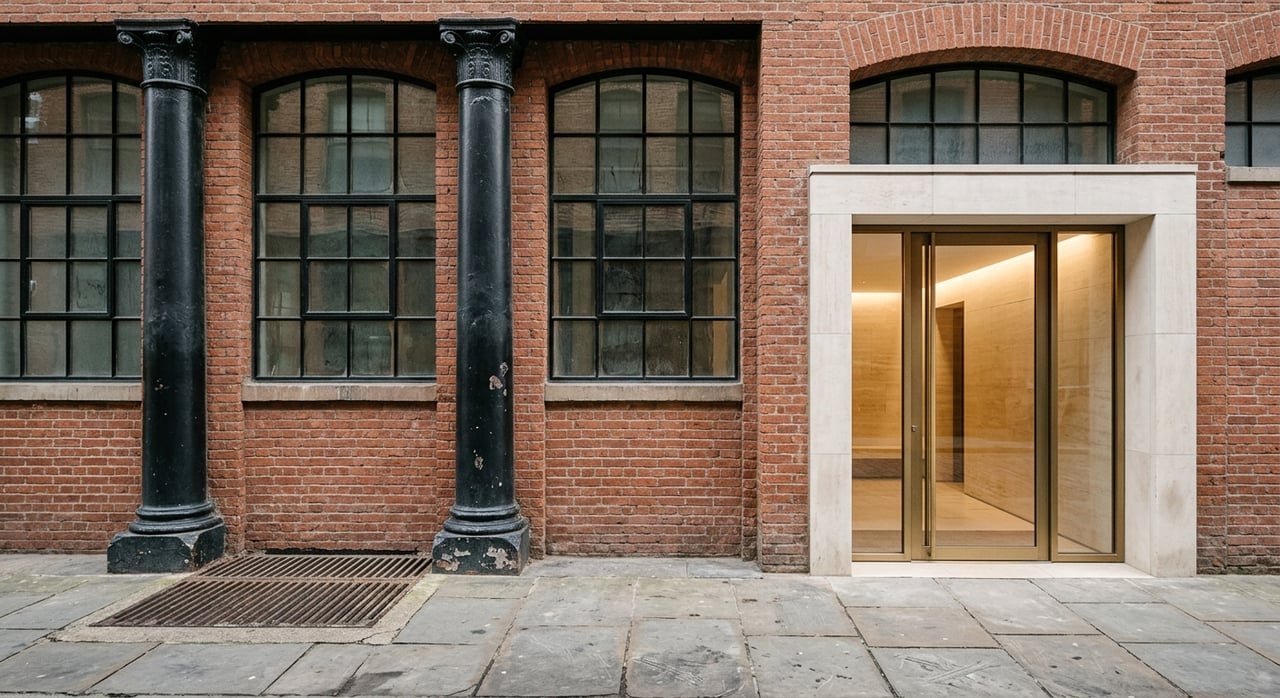
Even if you are not naming styles as you walk, you will likely notice the effect. Facades feel substantial, entrances often feel ceremonial, and many buildings contribute to a streetscape that looks collected over time rather than built all at once.
Culture is part of daily life
The Upper West Side is not only about architecture and park access. It also supports a cultural calendar that is unusually dense for a primarily residential Manhattan neighborhood. That is one reason the area appeals to people who want more than a place to sleep.
Several major institutions are located here or along its southern edge. Lincoln Center sits between West 62nd and 65th Streets and Columbus and Amsterdam Avenues, while the American Museum of Natural History is across from Central Park between West 77th and 81st Streets. The New York Historical at 170 Central Park West and the Museum of Arts and Design at 2 Columbus Circle deepen that museum-and-performance presence.
The south end feels more active
If you are trying to understand the neighborhood block by block, the southern end around Lincoln Square tends to feel the most commercially active and institution-dense. Lincoln Square BID describes this area as a bustling mixed-use district anchored by Lincoln Center and The Shops at Columbus Circle, with restaurants, retail, and cultural destinations along Broadway, Columbus, and Amsterdam Avenues.
Farther north, the neighborhood reads as more residential. That shift is part of the Upper West Side’s appeal. You can access a concentration of cultural venues and still come home to quieter blocks with a strong residential identity.
Everyday life is not just landmarks
The Upper West Side’s lifestyle works because arts and daily routines overlap. Lincoln Square BID notes that Richard Tucker Park hosts a Thursday and Saturday greenmarket, and Dante Park offers free summer concert programming.
Those details matter because they show how the neighborhood functions beyond headline institutions. You can run errands, spend time outdoors, and enjoy public programming without feeling like you are living in a purely tourist-driven district.
Parks shape the pace of the neighborhood
For many people, the defining practical advantage of the Upper West Side is its access to major green space on both sides. That is unusual in Manhattan, and it changes how the neighborhood feels day to day.
You are not choosing between urban life and park access here. In many parts of the neighborhood, both are built into the experience.
Central Park on the east side
Central Park spans 843 acres from 59th Street to 110th Street between Fifth Avenue and Central Park West. The Central Park Conservancy notes that it is open daily from 6:00 am to 1:00 am and includes features that support daily use, including 10,000 benches, eight running loops, and habitat for 210 bird species.
For Upper West Side residents, that means the park can become part of your actual routine rather than an occasional destination. Morning walks, runs, playground stops, and casual time outdoors are easy to build into the week.
Riverside Park on the west side
Riverside Park gives the neighborhood a very different type of outdoor space. NYC Parks describes it as a four-mile historic park along the Hudson River from 72nd to 158th Street, with scenic views, recreation space, the Hudson River Greenway, and trail access through the Bird Sanctuary from the 116th Street and Riverside Drive entrance.
That riverside setting gives the west side of the neighborhood a distinct mood. It feels more open, more linear, and closely tied to waterfront movement and long walks.
Programs make the parks feel active
The park system here is not just scenic. Riverside Park Conservancy’s Summer on the Hudson program runs from May through October between West 59th and 181st Streets and includes more than 300 free events such as concerts, movies under the stars, dance parties, fitness classes, and educational programming.
That kind of schedule adds another layer to neighborhood life. The parks are part of the social and cultural fabric, not just background scenery.
Transit supports a car-light lifestyle
The Upper West Side’s residential appeal is closely tied to transit access. The same historical forces that shaped its prewar growth still matter because they support easy movement across Manhattan today.
Lincoln Center’s official transit information lists nearby accessible subway stops at West 66th Street on the 1 train and 59th Street-Columbus Circle on the A, B, C, D, and 1 trains. Nearby bus service includes the M5, M7, M10, M11, and M104.
The west side of Central Park is also served by the B, C, 1, 2, and 3 lines, along with the M10 and M72 buses. For many residents, that combination of subway, bus, and walkable access to parks and institutions supports a very manageable car-light routine.
What Upper West Side living feels like
At its core, the Upper West Side offers a combination that is hard to replicate. You get a neighborhood shaped by preserved prewar architecture, broad cultural access, and two major park systems that influence how people move and spend time.
Day to day, that can mean a morning in Central Park, errands along Broadway or Amsterdam, and an evening performance or museum visit without leaving the neighborhood. It can also mean simply living on a block where the built environment feels durable and deeply connected to Manhattan’s history.
For buyers comparing Manhattan neighborhoods, the Upper West Side often stands apart because it feels complete. It has residential depth, cultural range, strong transit, and a setting between two major parks that continues to define its value.
If you are evaluating Manhattan neighborhoods with an eye toward architecture, long-term livability, and the nuances of prewar housing, a measured local perspective can make the search more efficient. For discreet, high-touch guidance on Manhattan real estate, connect with Francine Crocker.
FAQs
What is the Upper West Side neighborhood boundary in Manhattan?
- The Upper West Side is generally defined by Manhattan Community Board 7 as north of West 59th and 60th Streets and Columbus Circle, east of Central Park West, west of the Hudson River, and north to West 110th Street.
What kind of architecture defines Upper West Side living?
- Upper West Side architecture is known for a layered prewar character that includes rowhouses, stooped brownstones, and large apartment houses, with styles such as Beaux-Arts, Italian Renaissance, and neo-Gothic.
What makes Upper West Side parks stand out for daily life?
- The neighborhood has unusual access to both Central Park and Riverside Park, giving residents easy options for running, walking, waterfront recreation, and seasonal public programming.
What is the most active part of the Upper West Side?
- The southern section around Lincoln Square tends to be the most active, with a dense concentration of performance venues, museums, restaurants, retail, and transit connections.
Is the Upper West Side easy to navigate without a car?
- Yes. Based on the neighborhood’s subway, bus, and park access, the Upper West Side supports a practical car-light lifestyle for many residents.