What makes a SoHo loft feel unforgettable to the right buyer? In a market where homes trade in the multi-million-dollar range and inventory stays relatively limited, strong design alone is not enough. You need marketing that highlights authenticity, explains the space clearly, and respects the expectations of a privacy-conscious audience. Let’s dive in.
Why SoHo loft marketing requires precision
SoHo is not a generic luxury market. It is a centrally located, transit-accessible mixed-use district with residential, office, creative, and retail uses, and it sits within a highly recognizable architectural setting. That context shapes how buyers evaluate a loft long before they schedule a visit.
Recent 2026 market data place SoHo firmly in premium territory, with reported values and list prices ranging from about $3.10 million to $3.95 million depending on the source and time frame. Homes have also been taking time to sell, with reported days on market stretching into the low hundreds. For you as a seller, that means presentation and pricing discipline matter.
Design-conscious buyers in this segment are often not just comparing bedroom counts or raw square footage. They are looking for a home that feels architecturally credible, visually refined, and thoughtfully maintained. Your marketing has to help them see that value quickly and clearly.
Lead with original loft character
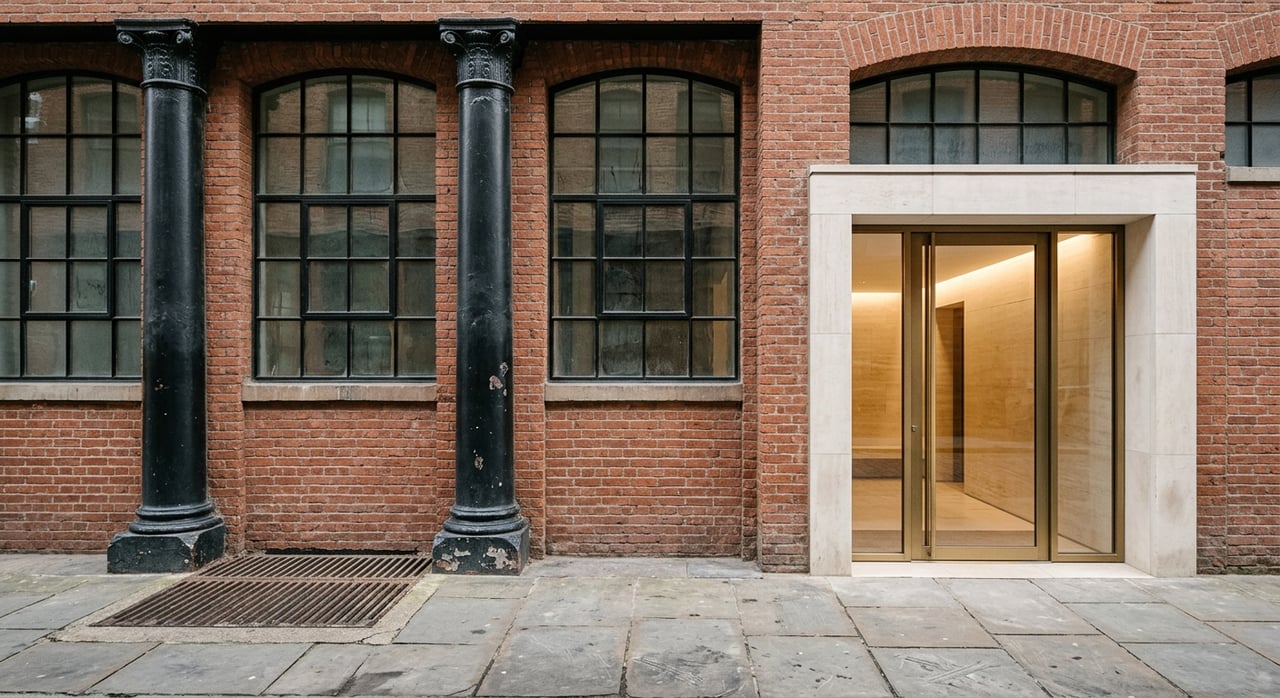
In SoHo, original details are often part of the property’s core value. NYC Planning describes the SoHo Cast Iron Historic District as the largest concentration of full and partial cast-iron facades in the world, spanning 26 blocks and 500 buildings. That kind of architectural identity is not background scenery. It is part of what buyers are paying attention to.
If your loft has oversized windows, masonry, cast-iron elements, or other period details, those features should not be treated as side notes. They should help define the entire listing story. Buyers drawn to SoHo often want a home that feels tied to the neighborhood’s historic fabric, not one that could be anywhere.
That same historic context also calls for accuracy. In landmarked areas, changes to buildings generally require Landmarks Preservation Commission approval before work begins. Your marketing should reflect what is true about the property today, not overstate improvements or blur the line between original character and recent alterations.
Verify legal use before marketing
Before you write listing copy or approve marketing assets, confirm the unit’s legal occupancy and use status. This is especially important in SoHo because of the area’s zoning and conversion history. NYC Planning and the Department of Buildings explain that the district has gone through meaningful regulatory change, including the creation of the Special Soho-Noho Mixed Use District in 2021.
The practical takeaway is simple: make sure the marketing matches the property’s actual legal status. That includes how spaces are described and how the home is positioned to buyers. In a sophisticated Manhattan market, precision protects both credibility and deal momentum.
Stage for volume and light
Staging works best when it helps buyers picture how they would live in a home. According to the National Association of Realtors’ 2025 staging profile, 83% of buyers’ agents said staging made it easier for buyers to visualize a property as their future home. That matters in a loft, where openness can feel exciting in person but harder to interpret online.
For a SoHo loft, the goal is rarely to add more visual content. It is to reveal what is already powerful about the space. Volume, ceiling height, light, and architectural rhythm should stay front and center.
A smart staging approach often includes:
- Keeping window lines as open as possible
- Using furniture that matches the scale of the room and ceiling height
- Defining living, dining, and work zones without cluttering circulation
- Editing decorative layers so they do not compete with the architecture
- Prioritizing cleanliness, decluttering, lighting, walls, and floor presentation
The most effective result feels calm, legible, and authentic. Buyers should notice the loft first, not the staging budget.
Build a visual package that explains the home
Online presentation does a great deal of the early selling work. Zillow’s 2025 buyer research found that floor plans were the most important listing feature for 33% of buyers, followed by high-resolution photos for 26% and 3D or virtual tours for 20%. NAR also found that 81% of buyers rated listing photos as the most useful online feature.
That is especially relevant for lofts because open layouts can be hard to read from photos alone. A beautiful image may attract attention, but a buyer still needs to understand circulation, scale, and how one area connects to another. The marketing package should do both jobs.
For many SoHo lofts, that means creating an editorial-style asset set that still explains the property clearly. A strong sequence often includes:
- A hero image that captures the room’s scale and architectural identity
- Wide shots that establish ceiling height, window exposure, and openness
- Detail images that show original elements and material quality
- A floor plan early in the image sequence
- If appropriate, a 3D or virtual tour that supports layout comprehension
This is not about flooding buyers with images. It is about giving them enough visual clarity to decide that the home is worth seeing in person.
Keep photography aspirational and honest
In a design-forward market, photography should be polished. It should also be truthful. NAR has cautioned that virtual staging and digital edits should not distort a property’s true condition, scale, or likely cost, and that misleading visuals can create disappointment.
That warning matters in SoHo, where buyers tend to respond well to refined presentation but are quick to notice when marketing feels overly manipulated. If a room is edited beyond recognition or staged in a way that misstates proportions, trust can erode before a showing even begins.
The better strategy is simple. Use excellent photography, thoughtful styling, and strong sequencing, but keep the presentation anchored in reality. Authenticity is part of the luxury experience.
Price with discipline, not optimism
SoHo’s pricing data tells an important story. Depending on the source, current values, listing prices, and sale prices sit in a premium range, while homes are also taking meaningful time to sell and achieving around 96% of asking price in some June 2026 reporting. In other words, the market can reward quality, but it does not forgive sloppy pricing.
If you are marketing to design-conscious buyers, overpricing can be especially costly. This audience often knows how to compare finish quality, building character, and layout utility across competing listings. A home that enters the market with the wrong price can lose freshness before the right buyer ever visits.
Precision pricing supports the rest of the marketing plan. It helps generate serious early attention, strengthens the listing’s credibility, and gives your presentation a better chance to convert into qualified showings.
Use controlled exposure to support exclusivity
High-end marketing is not the same as maximum exposure at every moment. NAR notes that MLS exposure usually provides the broadest audience and that early views, saves, and shares can help a listing surface in buyer alerts and search results. Even so, a SoHo seller may still benefit from a controlled launch sequence.
That approach can mean preparing every asset first, then releasing the listing deliberately rather than casually. For a privacy-sensitive owner, discretion is not secrecy. It is quality control.
A controlled launch may help you:
- Protect the home from unnecessary traffic early on
- Preserve a sense of exclusivity
- Ensure pricing, staging, photography, and floor plans are aligned before public release
- Create a stronger first impression when the listing goes live
This kind of sequencing fits well with a boutique, fiduciary approach. The goal is not noise. The goal is the right attention.
Plan showings around buyer experience
NAR distinguishes between appointment-based showings and open houses that gather multiple buyers at once, and it notes that the first open house after listing can maximize exposure. In a SoHo loft sale, the right showing strategy depends on the property, the owner’s privacy preferences, and the broader marketing plan.
In some cases, it may make sense to begin with limited appointments or broker previews before opening access more broadly. That can help preserve the condition of the home and create a more deliberate experience for early visitors. It also gives serious buyers room to focus on the space itself.
However the showing schedule is structured, the core principle stays the same. Every visit should reinforce the listing story established online. The home should feel composed, proportionate, and true to the promise of the marketing.
Why stewardship matters in a SoHo sale
Marketing a SoHo loft to design-conscious buyers is partly about aesthetics. It is also about judgment. You need to know which details carry value, which improvements deserve emphasis, how to present the layout clearly, and when discretion strengthens the sales process.
That is where high-touch advisory matters. In a complex Manhattan market, polished marketing works best when it is paired with careful positioning, disciplined execution, and a strong understanding of how sophisticated buyers make decisions.
If you are preparing to sell a loft or another architecturally significant Manhattan home, a measured strategy can help you protect value while reaching the right audience. To discuss a confidential approach, connect with Francine Crocker.
FAQs
How should you market a SoHo loft to design-conscious buyers?
- Focus on original architectural character, accurate property positioning, scaled staging, high-resolution photography, a clear floor plan, and a controlled launch that supports both reach and discretion.
Why do original details matter in SoHo loft marketing?
- SoHo’s historic built environment is a major part of its appeal, so features like oversized windows, masonry, and cast-iron character can help a loft stand out when they are presented as core value drivers.
What listing photos matter most for a SoHo loft?
- Buyers respond strongly to high-resolution photos, but loft listings also benefit from wide shots, detail images, and a floor plan early in the sequence so the layout is easy to understand.
Should you stage a SoHo loft before listing it?
- In many cases, yes. Staging can help buyers visualize the home, but in a loft setting it should emphasize light, volume, and room scale rather than cover the architecture with heavy decor.
Why is legal use important when selling a SoHo loft?
- Because SoHo has a specific zoning and conversion history, your marketing should match the unit’s actual legal occupancy and use status to avoid confusion and protect deal credibility.