If you are thinking about buying a condo in Tribeca, the first surprise is often not the architecture. It is the price spread. In one neighborhood, you can see entry-level one-bedroom listings around $1.16 million and trophy residences asking well above $20 million, all within a market that still ranks among Manhattan’s most expensive. That can make the search feel exciting, but it also raises the stakes on due diligence. This guide will help you understand how the Tribeca condo market is structured, what drives pricing, and what to review before you commit. Let’s dive in.
Tribeca market basics
Tribeca remains one of the priciest condo submarkets in Manhattan. According to PropertyShark’s Q3 2025 ranking of NYC neighborhoods, Tribeca ranked No. 2 citywide with a median sale price of $3.77 million. PropertyShark’s February 2026 market page put the median sale price at $4.0 million, with a median price per square foot of $2,019 and 30 transactions.
That pricing sits far above the broader Manhattan condo market. In Douglas Elliman’s Manhattan Q4 2025 report, the overall Manhattan condo median was $1.661 million. For buyers, that gap matters because it means Tribeca is not just expensive by city standards. It is expensive even within Manhattan’s luxury landscape.
Current conditions also point to a more negotiable environment than many buyers expect. Realtor.com’s February 2026 Tribeca snapshot describes the neighborhood as a buyer’s market, with 147 homes for sale, 106 median days on market, and homes selling at about 95% of last asking price.
What price points look like in Tribeca
One of the most useful things to understand before you buy is that Tribeca does not move as a single uniform market. Active listings on StreetEasy’s Tribeca sales page show a broad range of asking prices, from one-bedroom homes around $1.16 million and $1.695 million to two-bedroom and three-bedroom homes largely in the $2.5 million to $7.65 million range. Penthouses and high-profile units can exceed $9 million and reach roughly $25.95 million.
That wide range can create the impression that there is a Tribeca condo for every budget. In practice, the center of gravity still sits well above Manhattan norms. If you are entering the market at the lower end of the neighborhood’s range, it helps to be realistic about tradeoffs in size, building type, layout, or amenities.
It also helps to compare Tribeca with nearby luxury submarkets. In PropertyShark’s Q3 2025 ranking, Tribeca sat behind Hudson Yards and ahead of SoHo, while Hudson Square followed at $2.65 million. That gives useful context if you are comparing downtown options but want a similar level of prestige, design quality, or location convenience.
Why Tribeca inventory feels limited
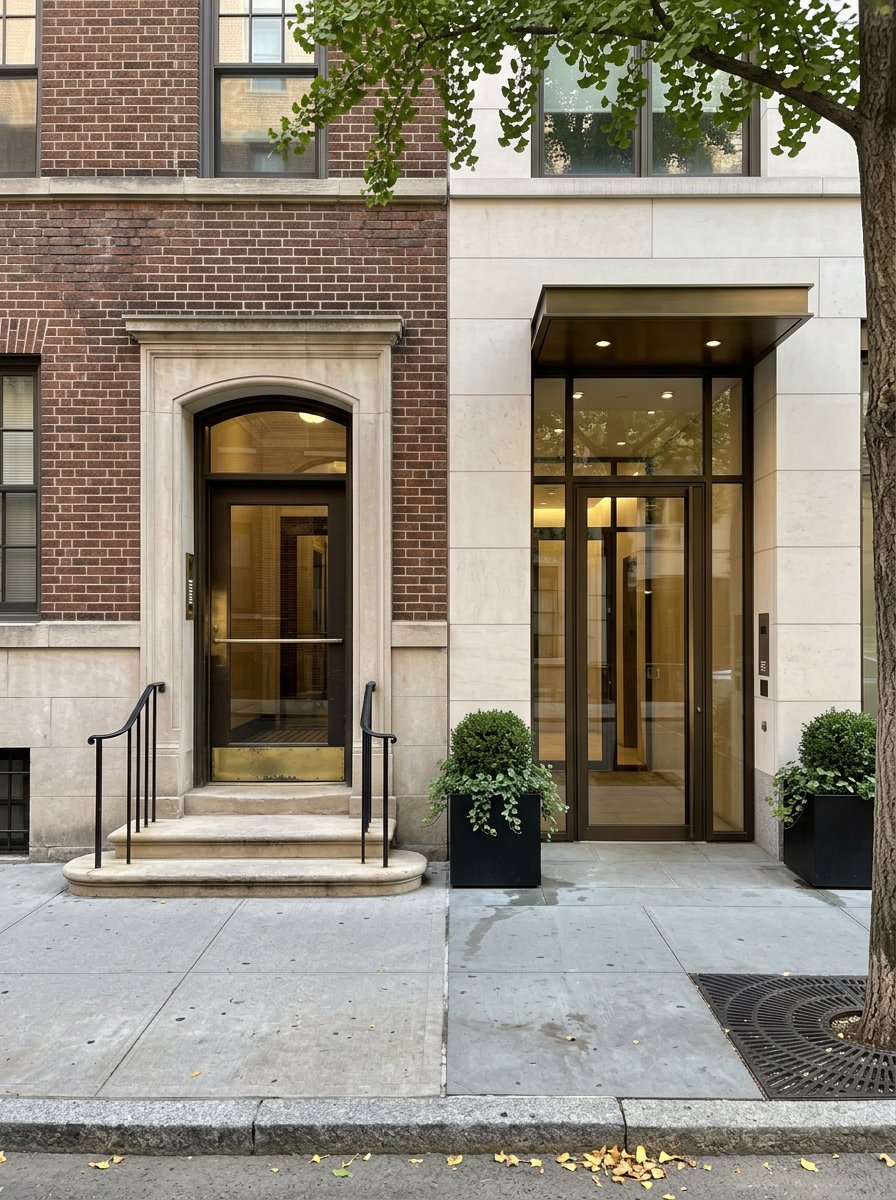
Tribeca’s condo market is shaped by its built environment. The neighborhood includes multiple historic districts, including Tribeca East, Tribeca North, Tribeca South, Tribeca South Extension, and Tribeca West, as listed by the NYC Landmarks Preservation Commission. A City Planning Commission report on 51 White Street notes that Tribeca East covers about 12 blocks and roughly 197 buildings.
That matters because much of Tribeca’s character comes from older commercial loft buildings that were later converted to residential use. The same report notes that many surrounding buildings are five- to seven-story loft structures and that a 1995 rezoning aimed to reinforce the area’s loft character. In simple terms, Tribeca is not a neighborhood where new supply can expand freely.
For buyers, that tends to produce three main condo categories:
- Historic loft conversions
- Boutique mid-rise condos in former commercial buildings
- Newer contextual towers and new developments
You can see all three on StreetEasy’s current Tribeca inventory page, including homes in buildings such as 108 Leonard, 56 Leonard, 30 Park Place, 100 Barclay, 25 North Moore, 93 Worth, and 80 Chambers. Because so much of the neighborhood is landmarked or contextually zoned, many future projects must fit the existing streetscape instead of reshaping it. That can help support long-term scarcity, but it also means each building deserves to be evaluated on its own terms.
Loft conversions versus new development
Tribeca buyers often face a core choice: buy into a conversion or buy sponsor-new. Both can be compelling, but they behave differently in the market and require different kinds of scrutiny.
Manhattan-wide data from Douglas Elliman’s Q4 2025 market report show that new-development condos had a median sale price of $2.285 million, average price per square foot of $2,597, and 96 days on market. Resale condos had a median sale price of $998,500, average price per square foot of $1,406, and 71 days on market.
Those are Manhattan-wide numbers, not Tribeca-only figures, but they help explain what many buyers experience locally. Sponsor-new units usually trade at a premium because they are newer and often more amenity-rich. Resales may offer a clearer operating history, more evidence of how the building is maintained, and a more grounded picture of monthly carrying costs.
Neither path is automatically better. If you value turnkey finishes and new systems, sponsor product may justify the premium. If you prefer seeing how a building actually functions over time, a resale can give you more practical information before you buy.
What to know about sponsor sales
If you are considering a sponsor unit, the single most important document is the offering plan. According to the New York Attorney General’s condo and co-op buyer guidance, the offering plan is the controlling disclosure document for a condo sale, and buyers should read the entire plan and consult an attorney before signing.
The Attorney General explains that sponsors must disclose material information, including unit types, common elements, restrictions, parking or recreation details, sponsor intentions regarding unsold units, and the sponsor control period. The same guidance also notes an important practical point for condo buyers: condo boards typically do not approve purchasers, so your focus should be on disclosure and legal review rather than board approval.
That distinction matters in Tribeca, where many buyers are familiar with Manhattan co-op rules and may assume the process works the same way. In a condo, you still need strong due diligence, but the risk profile is different. You are evaluating the building, the legal documents, and the economics of ownership more than a board interview process.
Why marketing materials are not enough
High-end new development marketing can be polished and persuasive. That is exactly why the Attorney General’s guidance warns buyers not to rely on brochures, renderings, or verbal promises. For new construction, the recommendation is to compare the offering plan against the actual unit and confirm whether promised amenities, appliances, facade details, and common spaces match what is legally documented.
This is especially relevant in Tribeca, where design and branding often play a major role in how new inventory is presented. A strong presentation may signal quality, but it is not a substitute for legal detail. If a feature is not promised in the offering plan, the sponsor is not obligated to deliver it.
That makes document review more than a legal formality. It is part of understanding exactly what you are buying.
What to review in a resale or conversion
If you are buying a resale condo or a unit in an older conversion, the due diligence shifts slightly. The Attorney General’s guidance recommends reviewing board minutes and the latest financial report because they can reveal assessments, repairs, or recurring building issues.
That is valuable in Tribeca’s conversion-heavy inventory. Many buildings have character, volume, and architectural detail that buyers love, but older building systems can also create future costs. The Attorney General specifically notes that major building-wide issues often show up around facades, roofs, elevators, plumbing, and boilers.
This does not mean older buildings are a problem. It means you should evaluate the upkeep record with care. A well-run conversion with a stable financial profile may be more predictable than a newer building that still has limited operating history.
Monthly costs matter more than the ask
The asking price gets attention, but ownership costs are what shape your long-term experience. In a condo, the unit owner is separately responsible for common charges and the property tax bill, as noted in the Attorney General’s guidance for buyers.
That means the true monthly cost is more than your mortgage payment and more than the price you negotiate. Amenity-heavy buildings may bring higher common charges, and in newer developments, the structure of those charges deserves careful attention.
You should also look at reserve strength, assessment history, and sponsor-held inventory. Under 13 NYCRR 23.3, sponsors are required to provide annual financial statements and a proposed budget, and they must pay common charges, special assessments, and real estate taxes on unsold units while the sponsor still controls the board. That framework gives buyers important information, but it still needs to be interpreted carefully with counsel.
How to think about amenities
Amenities can add real value, but they should be viewed as part of the cost structure, not just part of the sales pitch. A fitness center, pool, concierge staffing, private lounge, or parking access may improve daily use, but each feature can also affect monthly charges and long-term budget stability.
The legal question is simple: are those amenities actually included in the offering plan and building documents? If not, you should not assume they are guaranteed. In a neighborhood where presentation is often sophisticated, that distinction can protect you from expensive misunderstandings later.
A practical Tribeca buying checklist
Before you move forward on a Tribeca condo, it helps to pressure-test the opportunity from several angles.
- Compare the asking price with the neighborhood’s broader price band
- Identify whether the unit is sponsor-new or resale
- Review the offering plan carefully if it is a sponsor sale
- Check financial statements, budgets, and any assessment history
- Read board minutes for signs of repairs or recurring building issues
- Confirm which amenities are legally promised
- Calculate the full monthly carrying cost, including common charges and property taxes
- Evaluate how the building’s age and type may affect future maintenance
In a market where pricing can be high and inventory can be highly individualized, careful review is not a luxury. It is part of buying well.
The bottom line for Tribeca buyers
Tribeca offers a rare mix of historic loft character, high-design new development, and constrained supply in one of Manhattan’s most established luxury neighborhoods. It can be an exceptional place to buy, but it is not a market where you want to rely on headline pricing or polished marketing alone.
The smarter approach is disciplined and document-driven. When you understand the building type, the legal disclosures, the monthly cost structure, and the broader market context, you are in a stronger position to make a confident decision and negotiate from a place of clarity.
If you are weighing a condo purchase in Tribeca and want discreet, data-informed guidance, Francine Crocker can help you evaluate opportunities with the care and precision Manhattan real estate demands.
FAQs
What is the current condo price range in Tribeca?
- Active listings on StreetEasy show Tribeca condos ranging from about $1.16 million for some one-bedroom homes to roughly $25.95 million for penthouses and trophy properties, with many two-bedroom and three-bedroom homes falling between about $2.5 million and $7.65 million.
Is Tribeca currently a buyer’s market for condo purchases?
- Yes. Realtor.com’s February 2026 snapshot describes Tribeca as a buyer’s market, with 147 homes for sale, 106 median days on market, and homes selling at about 95% of last asking price.
What should you review before buying a new development condo in Tribeca?
- You should review the full offering plan, compare it to the actual unit and amenities being presented, and consult an attorney before signing, since the offering plan is the controlling disclosure document.
What should you check before buying a resale condo in Tribeca?
- You should review board minutes, financial reports, assessment history, and signs of building-wide repair issues such as facade, roof, elevator, plumbing, or boiler work.
How are condo purchases in Tribeca different from co-op purchases in Manhattan?
- According to the New York Attorney General, condo boards typically do not approve purchasers, so the main focus is on disclosure, legal review, and financial due diligence rather than board approval.
Why do monthly carrying costs matter when buying a Tribeca condo?
- In addition to your purchase price, you are responsible for common charges and property taxes, so the real monthly cost of ownership can be meaningfully higher than the asking price alone suggests.